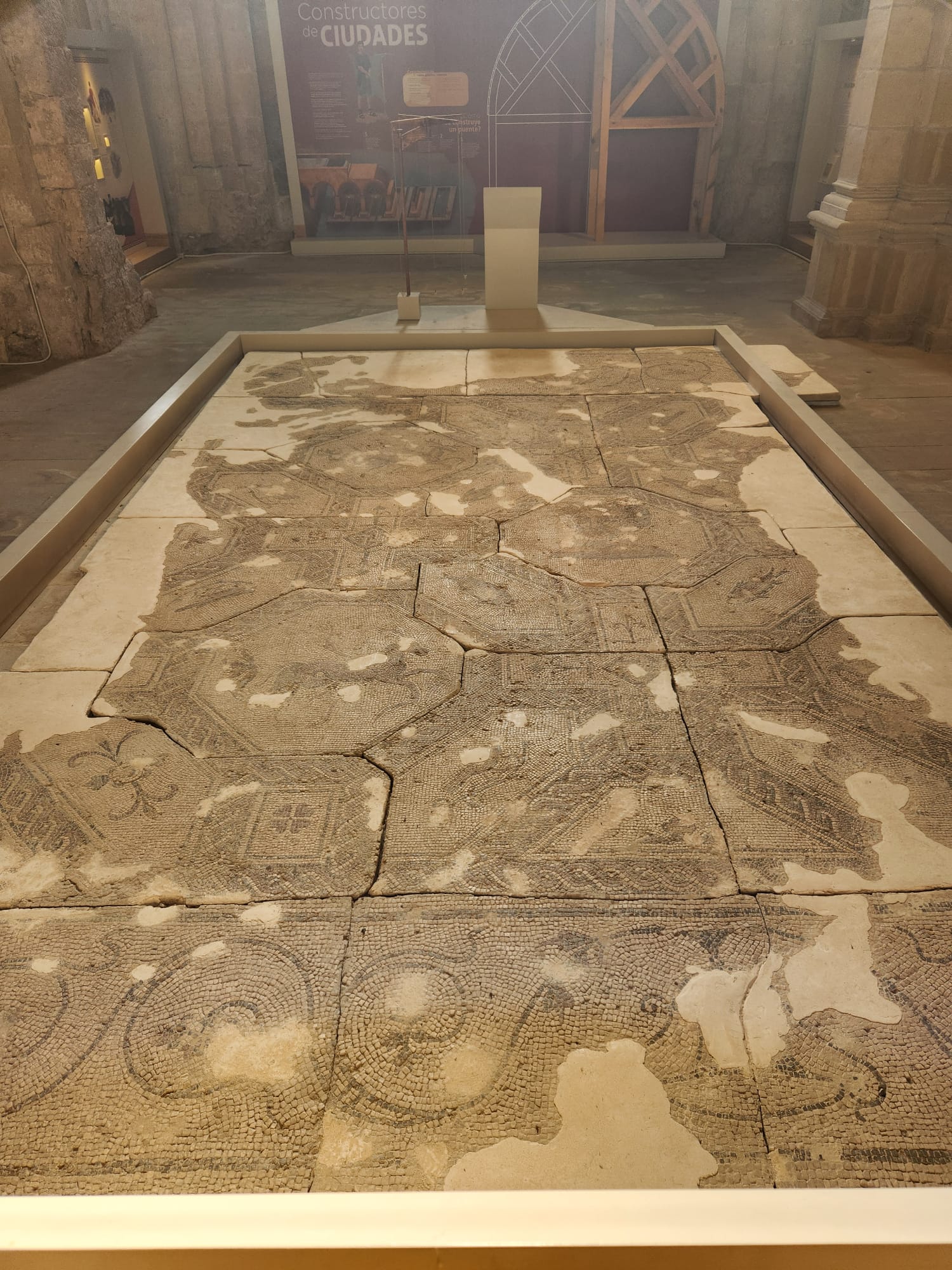
En 1975 durante la construcción de un silo en el término del Arquillo (Sasamón) se descubrió un pavimento musivo del que se informó a la Dirección General de Bellas Artes y al Servicio de Investigaciones Arqueológicas de la Diputación de Burgos, encargando estos últimos a J.A. Abásolo la realización de los trabajos correspondientes, encontrando este un recinto de 40 m2 sin muros. El objeto preferente de la excavación fue el pavimento, dónde se encontró este mosaico del siglo II, conformado por un esquema geométrico de octágonos, hexágonos, cruces y cuadrados. La figura central era un octógono irregular con el busto de un tritón de pelo ondulado con 2 pinzas de cangrejo en su tocado, siendo rodeado de otros 4 octógonos irregulares con motivos de animales marinos, 4 cruces que en su interior contienen el nudo de Salomón y flores de lis, y 4 hexágonos irregulares con peces en su interior. Este objeto de decoración no fue el único que se encontró en el Arquillo, sino también había abundantes restos de terra sigillata hispánica y monedas. Con los materiales encontrados del pavimento se puede traslucir que hubo una ocupación humana ininterrumpida, siendo este yacimiento un área urbana desde finales del siglo I hasta el siglo V, ya que tenemos monedas y restos de terra sigillata hispánica tardía.
In 1975, during the construction of a silo in the